
Barcelona. Padel World Summit. I Was in the Room. Here Is What I Heard.
Updated: 4 days ago
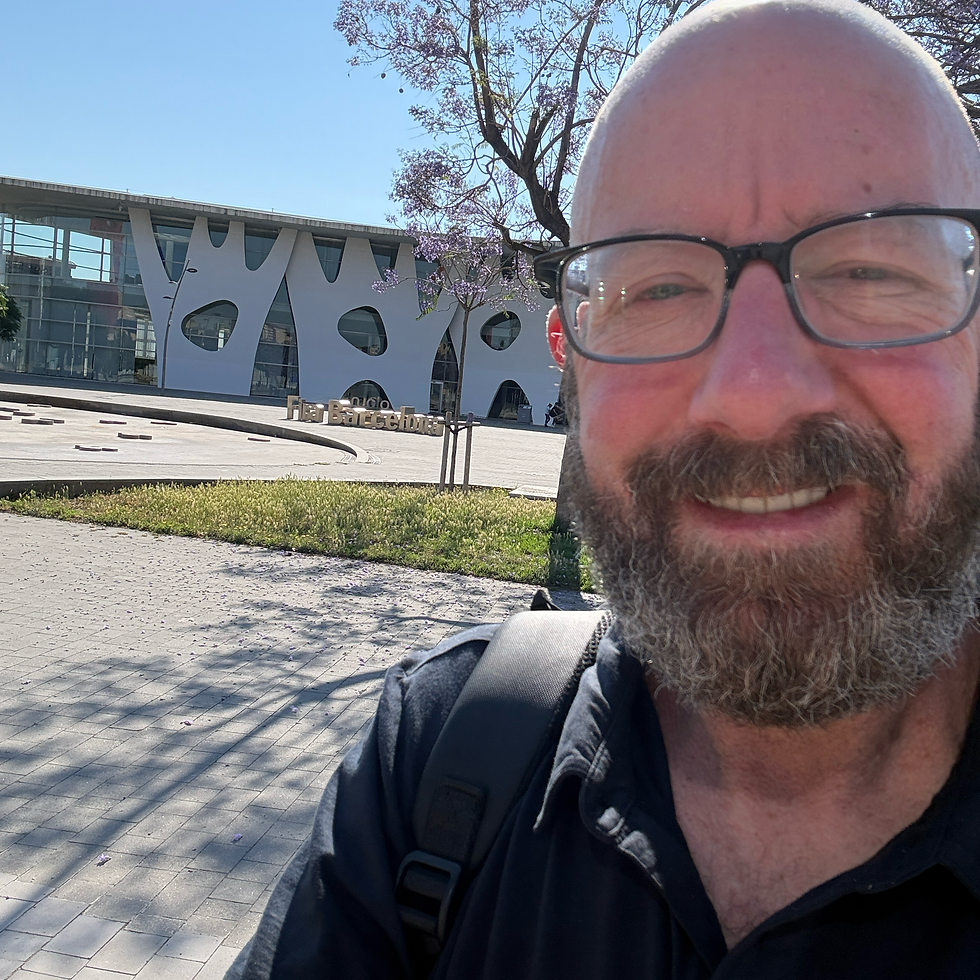
A week ago today I was standing in an empty convention hall in Barcelona before anyone else arrived.
Three months ago this business did not exist. I left a job I loved at the Racquet Sports Professionals Association because I believed this industry was about to go through something I needed to be part of. I took a chance. No clients. No track record as a founder. No guarantee anyone would care.
That Monday I walked into Fira Gran Via with Michel Gogniat, the Managing Director of the International Padel Cluster, before the booths were staffed and before 7,200 industry professionals filled that hall. We were there to set up. I was part of the team.
I thought about every person who opened a door for me. Everyone who said yes when they did not have to. Padel is a community-driven sport and I felt that every day in Barcelona. I am grateful. And I am just getting started.
That is the personal part. Here is what I actually found.
Everyone in that room wants to get to the United States. Nobody has figured out how.
Every European brand. Every South American manufacturer. Every technology company. At some point in every conversation over three days, the topic came back to the American market.
The interest is real. The plan is not. When to move. Who to partner with. How to approach it. Those questions came up again and again. The U.S. market is big, complicated, and expensive to get wrong. So the global padel industry is watching, waiting, and looking for the right partners before committing. Some of that caution makes sense. Markets that moved too fast without the right foundation - Sweden is the example everyone keeps coming back to - left real damage behind. The industry remembers.
The numbers confirm the opportunity. The PLAYTOMIC 2026 Global Padel Report, produced with PwC and presented at the summit, called the U.S. a "diamond in the rough." In 2025 the U.S. added 250 clubs and 330 courts. Globally the sport now has 58,300 courts, 20,900 active clubs, and 19.4 million players. By 2028 that is projected to reach 91,000 courts. The equipment market has grown 34% annually since 2019.
The people in that room are not wondering whether padel will come to the U.S. That is settled. They are trying to figure out how to be part of it when it does.
The window between wanting to be here and knowing how to get here is open right now. That is where the opportunity sits.
What the Global Padel Industry Heard About the U.S. - From an American at the Padel World Summit.
In Issue 05 I told you the session I was most curious about was the International Association of Pickleball and Padel Facilities presentation on the U.S. market. Twenty minutes. The global padel industry getting a straight read on us from someone who actually operates here.
Chris Klein opened with this: "The U.S. is simultaneously the biggest opportunity in padel, and one of the easiest markets to misread."
That line landed. Here is what he told them.
1. The U.S. is not one market. Every region is different. Demographics vary - Latino and Anglo adoption patterns do not look the same across the country. Climate changes the math on indoor vs. outdoor. Coastal states have hurricane standards that the European court specs do not account for. Permitting changes by the municipality. Labor costs change by region. A plan that works in Miami does not automatically work in Dallas or Denver.
2. Early adoption is already happening. Between 75 and 150 private country clubs and racquet clubs in the U.S. already have padel courts installed, are under construction, or have been formally announced. Country clubs are a natural fit because they already operate at premium price points that can support the investment. Pickleball has already done the hard work of getting American players comfortable with emerging racquet sports. And the most interesting conversion opportunity right now is indoor pickleball clubs converting to padel.
3. An improperly structured lease can kill a club. This one got quiet in the room. Triple Net leases make tenants responsible for taxes, insurance, and maintenance in addition to base rent. A $20-per-square-foot lease can quickly become $30. A four-court indoor padel club needs roughly 20,000 to 25,000 square feet. Monthly occupancy costs typically run $30,000 to $50,000. European operators are not used to this structure. They need to understand it before they sign anything in the U.S.
4. Community and programming drive success. Most Americans still do not know what padel is. The court gets them in the door. The community keeps them coming back. Beginner clinics. Leagues. Tournaments. Food and beverage. Women and couples programming. Social events unrelated to padel. The clubs that build a social layer around the courts are the ones with real retention. The ones that just rent court time are the ones that struggle.
5. European companies already have a head start. AFP Courts and MejorSet Padel Courts are already positioned in the U.S. market. Off The Glass manufactures courts in Indiana. CourtReserve, Playbypoint, and PodPlay Technologies are already operating here and competing with Playtomic for market share. The race is not starting. It started.
His closing was direct. Speed matters right now. Brand positioning opportunities still exist but they are closing. Many companies in that room in Barcelona could become major U.S. suppliers within five years. And the U.S. market will stay fragmented, regional, and relationship-driven for the foreseeable future.
That last part is worth sitting with. Fragmented. Regional. Relationship-driven. That is not a problem with the U.S. market. That is the U.S. market. The people who build the right relationships in the right regions right now will have something a later entrant cannot buy.
Two More Sessions Worth Reporting On.
The "How Latino Is Padel Really?" panel got at something the industry knows but rarely says out loud. The countries that built this sport no longer control where it is going. Spain and Argentina shaped padel's culture and still produce roughly 84% of the world's top 100 players. But the U.S., Scandinavia, the Middle East, and Western Europe are now pouring in capital, building real institutions, and setting new commercial standards. Bill Ullman was on that panel representing the U.S. Lauren Pedersen of SportAI on the technology side - how data and AI coaching accelerate adoption in markets that did not grow up with the sport. The panel's central point was simple: second movers who build with discipline can outrun pioneers who built without structure. That is not just a padel insight. That is the whole U.S. opportunity in one sentence.
The "It's Everyone's Game" panel asked a question the U.S. will have to answer sooner than most people think. Can padel grow broadly without losing the premium positioning that keeps the economics working? Right now in America, padel is played in private and country clubs. That is fine for now. But Patricio Misitrano moderated a conversation about what happens when the sport needs to reach beyond that - public access, municipal courts, community programs, university facilities. The tension is real. If padel never moves beyond its premium positioning, it will remain niche. If it opens too quickly without the right foundation, it loses the margin that keeps the business running. The U.S. has not had this conversation seriously yet. It needs to.
The most important conversation at the summit never made it onto the main stage.
The U.S. padel market is moving faster than the knowledge about what it takes to build it correctly here. American building codes require wind load calculations, foundation engineering, and glass certification that are different from European standards. That gap is real, and it is getting bigger.
The American Sports Builders Association (ASBA) and United States Padel Association (USPA) saw it coming. They published the first ever U.S. Padel Court Installation Manual last year to address it directly. The International Padel Cluster is leading the development of ISO 25808 — the first international standard for padel court construction — with 20 national bodies behind it and a 2027 target. As IPC First Vice President Jorge Caña López said, standardization is not just a technical exercise. It is a strategic decision.
The work is underway. It is not done. And courts are going up right now before it is finished.
If you are building in the U.S. today, ask for a signed structural engineering stamp from a U.S.-licensed engineer. Ask for glass safety certification. Ask for the building permit. Those three questions will tell you a lot about who you are dealing with.
The Innovation Arena told you exactly where the smart money is going.
Twenty startups. Three days. One jury of investors and industry insiders. Three winners.
First place: VAM-OS - gives club owners real-time visibility into cash flow and whether the business is actually making money. Second place: CourtBrain™ - pulls multiple booking and tracking systems into one tool, so operators are not managing five platforms. Third place: Bopa — a ball repressurization system on a rental model that extends ball lifespan and creates recurring revenue for clubs.
Look at those three. The industry just told you what the biggest unsolved problems in padel are right now. Operators cannot see their own numbers clearly. Court discovery is too fragmented. The consumables that keep facilities running are being thrown away too fast.
None of those three winners has a meaningful U.S. presence yet. That is an opening.
Three brands that stood out.
The Padel Lab was one of ten brands selected to install and operate a full court inside the play arena at the summit. Their court hosted live matches and demos featuring professionals, including Fernando Belasteguín and Carolina Navarro Björk. Their Head of Growth Juan Calderón de la Cruz invited me to play in their One Point Challenge on the floor. I lost - fast and badly. The relationship was the point. A brand that earns one of ten courts at the world's biggest padel event is not figuring things out. They know what they are doing. They are building toward the U.S. and are worth watching.
Varlion showed up in Barcelona with something you do not see much at trade shows - real mystery. They launched The Legacy Project, a new brand chapter built on more than 30 years of product development, and put people on court to test technology they said is not yet officially on the market. They also debuted a completely new line of pickleball paddles built from the ground up. Thirty years of craftsmanship. A serious push into new categories. Their story is not just a padel story. It is a story about where a brand goes after it has already proven itself. More on that in a future issue.
Skechers was one of just five Gold Spotlight Companies at the entire summit - the highest designation given to any of the 140-plus exhibitors on the floor. They brought a full padel footwear collection, including updates to the Viper Court series. A major American brand making a serious investment in global padel at the industry's most important annual event. Their message to every European brand in that building was clear. U.S. companies are paying attention.
Growth without structure does not last. Barcelona made that clear.
The summit opened with a session called "From Boom to Balance: Building a sustainable future for padel's global expansion."
The biggest padel event in the world started with a question about whether businesses can survive what comes after the first wave of growth. That is not a coincidence. It is a warning.
Sweden built hundreds of courts fast and watched closures follow. Indonesia is heading in the same direction. The lesson is the same everywhere. Filling courts is not the same as building a business. The clubs that are still standing in year three are not the ones that opened the most courts. They are the ones who gave people a reason to keep coming back.
The International Padel Federation understands this. They have more than doubled their national federations since 2019 — from fewer than 50 to 100 today. The Premier Padel Academy launched this year to standardize coaching and referee training globally. The FIP Promises youth circuit now runs across four continental circuits. Padel has secured official medal status at the 2026 Asian Games and the 2027 European Games as part of a long-term push toward Olympic inclusion.
Courts do not build a sport. Coaches, kids programs, women's pathways, global standards, and institutional credibility do.
The U.S. has time to do this right. Not a lot of time. But enough — if the people building right now are paying attention.
One more thing. About the organization nobody fully understands yet.
The Padel World Summit was created by the International Padel Cluster. Not a promoter. Not a venue. The industry organization that has been building the foundation of global padel since May 2020. The first edition was in Malaga in 2024. It moved to Fira Barcelona in 2025 and has grown every year since. This year 7,208 professionals from more than 30 countries showed up.
I was on that floor as the U.S. Development Partner for the organization that built this event.
And I spent part of my time walking exhibitors - people with paid booths at the summit — over to the IPC booth so they could learn what the Cluster actually does.
People exhibiting at the event that the IPC created did not know what the International Padel Cluster was.
That is not a knock on anyone. It is a problem worth solving. The work Michel Gogniat and his team are doing - building the institutional backbone of this sport, leading ISO 25808, producing this event - is serious work. It is being done well. And not enough people know about it. Part of my job going forward is changing that in the U.S. market.
The next Padel World Summit is May 4 to 6, 2027 in Barcelona. I will be there. The goal between now and then is to bring American companies into that room — as exhibitors, as members, as sponsors, as people with a seat at the table where the future of this sport is being decided.
That work starts now.
If the U.S. market is on your radar — let's talk.
Whether you are a U.S. company figuring out where padel fits in your growth plan, or a global brand trying to understand what it actually takes to enter this market - I want to talk to you.
Schedule thirty minutes with me. I will give you my honest read on where your business fits in the U.S. padel market, what the real opportunity looks like, and what I would focus on first. No pitch. No obligation. Just a straight conversation with someone who has been on the ground in this industry and just spent a week in Barcelona with the people building it globally.
If that is worth thirty minutes — book it now.
In Spain, they have a word - sobremesa. It means the time you spend at the table after the meal, just talking. That is what Barcelona felt like. The summit ended. The conversations did not. I am still processing what I heard. More to come.
Mike
mike@insidethelinesadvisory.com | 205.789.4006 | mikehknowles.com


Comments